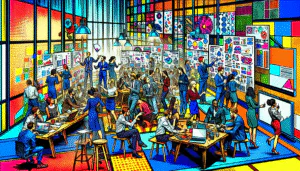
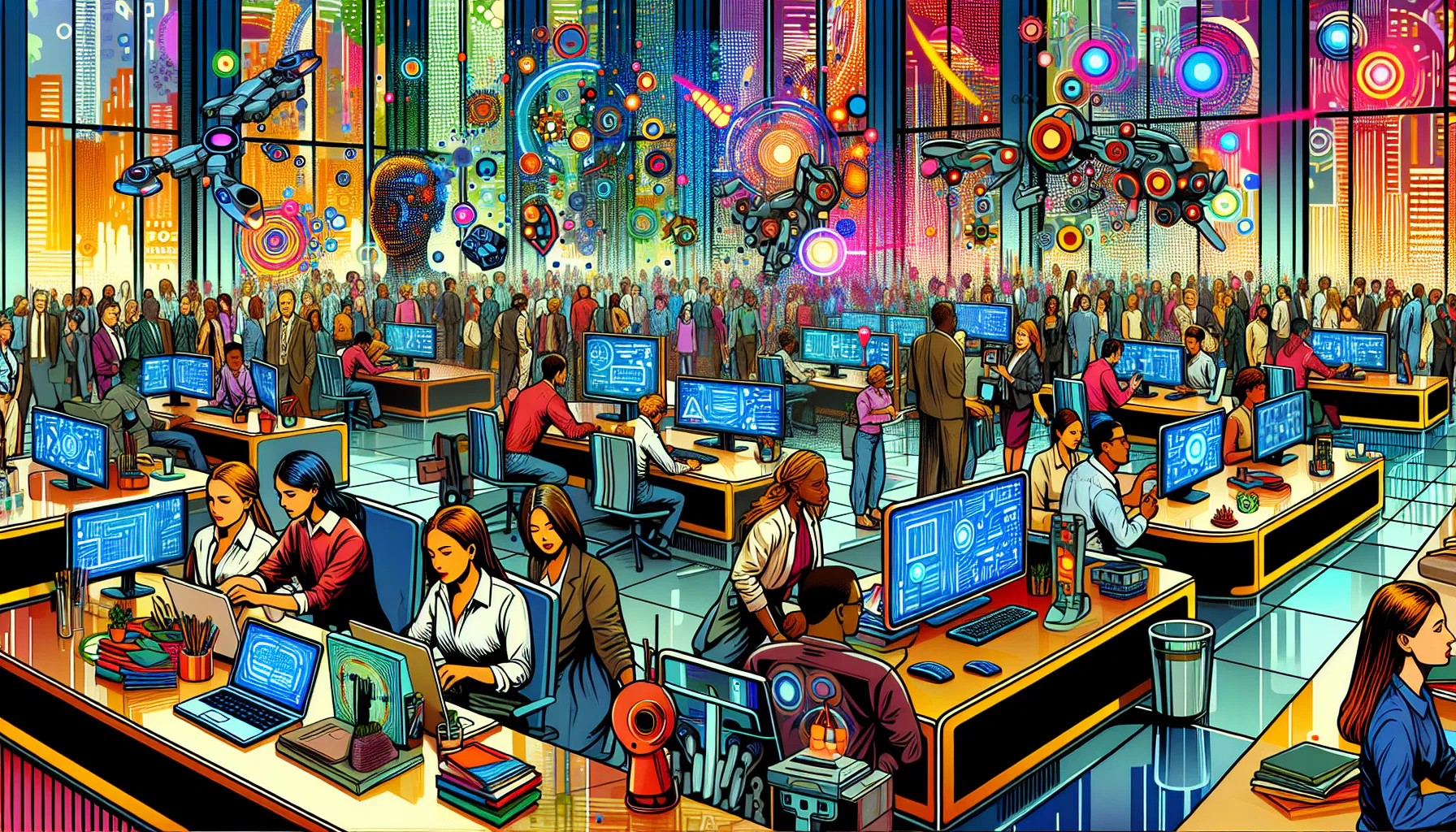
Artificial intelligence tools are reshaping the modern workspace with unparalleled ingenuity. Picture a bustling office where automated logic systems streamline repetitive tasks, leaving employees free to dream bigger.
From AI-powered digital assistants answering routine queries to predictive modeling software forecasting future trends, innovation is felt at every corner.
Sparking Productivity: The Power of AI
The Rise of Virtual Helpers
Virtual chat assistants are no longer science fiction—they’re daily collaborators.
These conversational AI tools offer seamless communication, handling customer inquiries and enhancing brand loyalty.
Imagine asking a digital assistant for a report summary and receiving it before your coffee cools.
Creating and Refining Content
Platforms like creative generation platforms transform abstract ideas into polished materials. Need a detailed blog post? Creative AI platforms such as Jasper weave narratives effortlessly.
And with intelligent text processing, even your drafts undergo a stylish makeover with grammar tweaks and flair.
Solving Complex Challenges
Decision support systems combined with knowledge discovery tools unlock insights from massive data sets. Meanwhile, semantic data processing ensures information retrieval is not just swift but contextually relevant.
These AI tools aren’t just aids—they are strategic allies.
From emotion detection software analyzing customer sentiments to task automation services expediting operations, artificial intelligence is a driving force in industries worldwide.
Next, let’s dive deeper into the cornerstone of this revolution—machine learning systems.

Machine Learning Systems: Unlocking Potential
Building Blocks of Intelligence
Machine learning systems serve as the backbone of many AI innovations.
They rely on adaptive algorithms that learn, evolve, and improve over time. For example, visual recognition systems scan and categorize images with precision, assisting industries from healthcare to retail.
Real-World Success Stories
Consider how data pattern analysis identifies fraud in financial transactions or how personalized AI solutions recommend products tailored to each shopper.
Automated design platforms, like generative design tools, are helping architects and engineers draft structures that were once unimaginable.
Navigating Challenges and Refining Systems
No journey is without hurdles. Interactive learning tools are key to troubleshooting issues, offering simulations that test user interaction models.
Additionally, domain expertise tools empower businesses to refine workflow enhancement systems for maximum efficiency.
The future of machine learning is boundless, blending intelligent editing software with information extraction systems that uncover hidden potential.
Through innovation and adaptability, these systems are changing the game.
The Journey Ahead
From photo editing algorithms elevating visual aesthetics to strategic data systems guiding critical decisions, machine learning remains a beacon of possibility.
As AI continues to evolve, its impact on operations, creativity, and collaboration will only grow, fueling progress in every direction.
Exploring Natural Language Understanding
Picture a world where virtual chat assistants decipher everyday speech as effortlessly as a trusted confidant. Natural language understanding bridges the gap between human communication and machine learning systems, enabling conversations that resonate deeply.
Imagine saying, “Let’s call it quits for today,” and conversational AI tools craft responses tailored to your intent and context.
Semantic data processing empowers these digital assistants to recognize phrasing nuances, boosting accuracy for adaptive algorithms in creative generation platforms.
Such advancements transform user interaction models into personalized AI solutions that truly understand.
From Subtle Nuances to Intelligent Responses
Consider how interactive AI systems decode sentiment, intent, and emotion within casual dialogue.
“Language isn’t just words; it’s emotion, culture, and unique phrasing. ”
Harnessing dynamic media generators with natural language understanding creates conversations that evolve effortlessly, whether using transcription software or collaborative idea tools.
An Integration Tip for Creative Platforms
To refine workflows with adaptive algorithms, explore APIs like Gemini or Jasper designed for evolving knowledge maps.
These personalized AI solutions seamlessly integrate into generative design tools, delivering clarity with intelligent text processing. Build creative AI platforms that balance emotion detection software and user interaction models for content optimization tools that adapt intelligently.
How Predictive Modeling Software Works
Envision a symphony of neural processing frameworks orchestrating decisions with precision.
Predictive modeling software acts as a maestro, blending data pattern analysis and machine learning systems to uncover hidden opportunities.
Professional advice platforms, for instance, harness these tools to forecast customer trends, enhancing strategic data systems with evolving knowledge maps that grow smarter, faster, and more adaptive.
Key Features of Predictive Systems
- Adaptive algorithms: Continuously evolve for better anomaly detection and behavior anticipation.
- Visual recognition systems: Decode patterns for tailored recommendation engines and workflow enhancement systems.
- Dynamic media generators: Streamline data inputs into actionable market trend analyzers and niche intelligence platforms.
Business Example: Forecasting Inventory
Imagine decision support systems empowering businesses to minimize waste while optimizing profits. A retail company using predictive modeling software can project seasonal inventory needs with accuracy akin to clinical knowledge locators. Machine learning systems like Gemini and Dovetail transform raw metrics into insights, amplifying operational efficiency tools and task automation services.
With tools like algorithmic content creation and curated content platforms, organizations embrace data pattern analysis to stay ahead, optimizing research facilitation assistants for strategic growth.
| Feature | Benefit |
|---|---|
| Natural Language Understanding | Bridges human communication with machine learning systems |
| Predictive Modeling Software | Uncovers hidden opportunities through data pattern analysis |
| Adaptive Algorithms | Continuously evolve for better anomaly detection |
| Dynamic Media Generators | Streamline data into actionable insights |
Applications Of Neural Processing Frameworks
Neural processing frameworks act as the unsung architects of innovation, empowering visual recognition systems and unleashing their potential across industries. Their ability to adapt effortlessly allows industries such as healthcare, creative generation platforms, and marketing to transform workflows with ease.
From Diagnoses to Dynamic Media
In healthcare, predictive modeling software leverages these frameworks to meticulously analyze medical imagery, identifying anomalies like tumors with pinpoint accuracy.
Meanwhile, creative generation platforms harness neural processing frameworks to create photorealistic visuals and dynamic media generators, fueling artistic innovation.
These frameworks power everything from emotion detection software that reads subtleties in human expressions to process automation software that manages repetitive tasks seamlessly.
Tips to Master the Frameworks
To amplify the efficiency of adaptive algorithms and maintain consistent accuracy, integrate high-quality pre-trained datasets into your system.
Regular model evaluations can also reduce bias, enhancing precision and reliability. This strategy unfolds the limitless possibilities of machine learning systems, ensuring their success in user interaction models across industries.
“Neural processing frameworks thrive when paired with iterative improvements and an appetite for innovation. ”
Visual Recognition Systems In Practice
Like the sharp eyes of a vigilant observer, visual recognition systems boost automation’s reach while interweaving it with creativity.
By reshaping industries with newfound efficiency, these systems offer untapped potential for creative generation platforms and task optimization.
Automation Across Domains
In logistics, decision support systems and workflow enhancement tools redefine operations by identifying objects and scanning barcodes with unparalleled accuracy. Within the realm of security, automated logic systems utilize these frameworks to detect and act on threats in real-time, creating a proactive layer of defense.
Meanwhile, intelligent text processing and content optimization tools empower marketers to tell enriching stories with impactful visuals.
Nurturing System Precision
Want to optimize outcomes? Update datasets with contextually rich examples.
This approach breathes life into algorithmic refinement systems and ensures that tools like photo editing algorithms and instant translation services push creative boundaries.
Whether it’s through the lens of domain expertise tools or interactive learning tools, precision fuels ingenuity.
“By continuously feeding innovation into datasets, visual recognition systems evolve with refined artistry and unmatched accuracy. ”
Key Insights About Neural Processing Frameworks
- Neural processing frameworks enhance visual recognition systems for industries like healthcare and marketing.
- Predictive modeling software in healthcare uses these frameworks to accurately identify medical anomalies.
- Creative generation platforms leverage neural frameworks to produce photorealistic visuals and dynamic media.
- Updating datasets with contextually rich examples improves algorithmic refinement and system precision.
Enhancing Communication With Virtual Chat Assistants
Machine learning systems have unlocked the potential of virtual chat assistants, turning them into dynamic conversational partners that adapt and evolve. Imagine a world where natural language understanding enables assistants to pick up emotional cues, transforming basic exchanges into meaningful interactions.
Advances like sentiment analysis empower conversational AI tools to mirror empathy and refine their responses to suit user sentiment.
This creates stronger connections and fosters trust.
Key Features Revolutionizing Engagement
- Contextual Memory: Neural processing frameworks now allow assistants to track multi-turn conversations, providing coherent and human-like dialogues.
- Predictive Responses: Predictive modeling software anticipates user needs, offering solutions even before queries are fully formed.
- Emotion Recognition: Emotion detection software tailors interactions by discerning user moods, enabling a more personalized touch.
Imagine contacting a customer interaction system during a busy day. Through intelligent text processing and seamless user interaction models, the assistant not only resolves your issue but predicts follow-up concerns. For instance, ChatGPT assists customers by preemptively suggesting solutions, saving time while offering a polished experience. Such personalized AI solutions enhance operational efficiency tools, reshaping how businesses engage with users.
As we embrace this transformation, the stage is set for collaborative tools like generative design assistants to redefine how technology uplifts creativity. Transitioning from enhanced communication, we dive into the fascinating realm of creative generation platforms.
Creative Generation Platforms For Innovation
Creative AI platforms are changing the way ideas come to life, blending human creativity with the unparalleled computing power of predictive modeling software. How? By harnessing the potential of machine learning systems and automated logic systems, they empower creators to think beyond traditional boundaries. Tools like Jasper and DALL-E 3, for example, merge semantic data processing with aesthetic image tools, making artistic transformation tools more accessible than ever.
Applications in Design and Media
- Visual Recognition Systems: Dynamic media generators craft stunning visuals for campaigns with unmatched speed.
- Brainstorming Assistants: Hybrid collaboration tools spark innovative ideas for storytelling and design concepts.
- Process Automation Software: Workflow enhancement systems streamline editing and revision processes with precision.
Picture a designer using tailored recommendation engines alongside photo editing algorithms. With active data insights and algorithmic refinement systems, the iterative process becomes a synergy of human judgment and AI-powered perfection. Combining interactive AI systems with domain expertise tools ensures both creativity and efficiency thrive in tandem.
Boosting Creativity Outputs
To amplify innovation, consider integrating evolving knowledge maps into your workflow. These curated content platforms provide fresh perspectives, while niche intelligence platforms fuel unique angles for content creation. Pairing your intuition with automated design platforms ensures that every idea, no matter how abstract, is brought to life seamlessly. As creativity embraces AI’s guiding hand, the possibilities are boundless.
From bolstering communication with virtual chat assistants to redefining creativity through AI, the future brims with potential, urging us to explore uncharted territories where human ingenuity and computational innovation software meet artistry and design.
| Key Feature | Benefit |
|---|---|
| Contextual Memory | Enables coherent and human-like dialogues in multi-turn conversations |
| Predictive Responses | Anticipates user needs and offers solutions proactively |
| Emotion Recognition | Tailors interactions by discerning user moods for personalization |
| Creative AI Platforms | Blends human creativity with AI for innovative design and media outputs |
Task Automation Services And Efficiency
Artificial intelligence tools, such as interactive AI systems and neural processing frameworks, are transforming the landscape of task automation, offering unprecedented efficiency and precision. Picture predictive modeling software forecasting sales trends or semantic data processing extracting insights from vast datasets—these innovations empower workflows to thrive in dynamic environments.
Real-World Applications of Automation
From virtual chat assistants responding to customer queries to transcription software converting discussion points into actionable agendas, automation has seamlessly woven itself into daily routines.
Consider using content optimization tools for your marketing campaigns or deploying workflow enhancement systems to streamline team projects.
These solutions, paired with robust decision support systems, drive results and open doors to creative possibilities.
“Automation is not about replacing human ingenuity; it’s about amplifying it through smarter tools. ”
Balancing Automation and Human Oversight
While machines excel at efficiency, the essence of creativity and accountability still lies with humans. Integrate hybrid collaboration tools into your process to harmonize automated logic systems with domain expertise tools.
Periodically assess the outputs generated by algorithmic content creation or adaptive algorithms to maintain relevance and accuracy. Establish checkpoints to review results and adapt strategies to ensure your workflow embraces technology responsibly without compromising the human touch.
The rise of tools like Explainpaper and Jasper demonstrates how blending process automation software with human oversight fosters creativity while optimizing efficiency.
Whether brainstorming with collaborative idea tools or harnessing personalized AI solutions, the key lies in cultivating a cohesive relationship between machine and mind.
Task Automation
- Interactive AI systems and neural processing frameworks improve efficiency and precision in workflows.
- Predictive modeling software and semantic data processing extract valuable insights from large datasets.
- Automation tools like virtual chat assistants and transcription software streamline daily tasks.
- Hybrid collaboration tools harmonize automated systems with human expertise for balanced oversight.